Microsoft stepped into the fitness wearable market with the Microsoft Band. This is a device that tried to combine detailed health tracking with everyday smart features. This is not like other simple fitness bands that mainly counted steps and calories; the Band packed a wide range of sensors, built-in GPS, and continuous heart-rate monitoring into one device. This can also connect with Android, iPhone, and Windows Phone smartphones. This provides users access to notifications and health data across different platforms. However, its technology attracted attention; reviewers also questioned its bulky design, comfort, battery life, and limited water resistance.
Microsoft Band Features: What Made It Different?
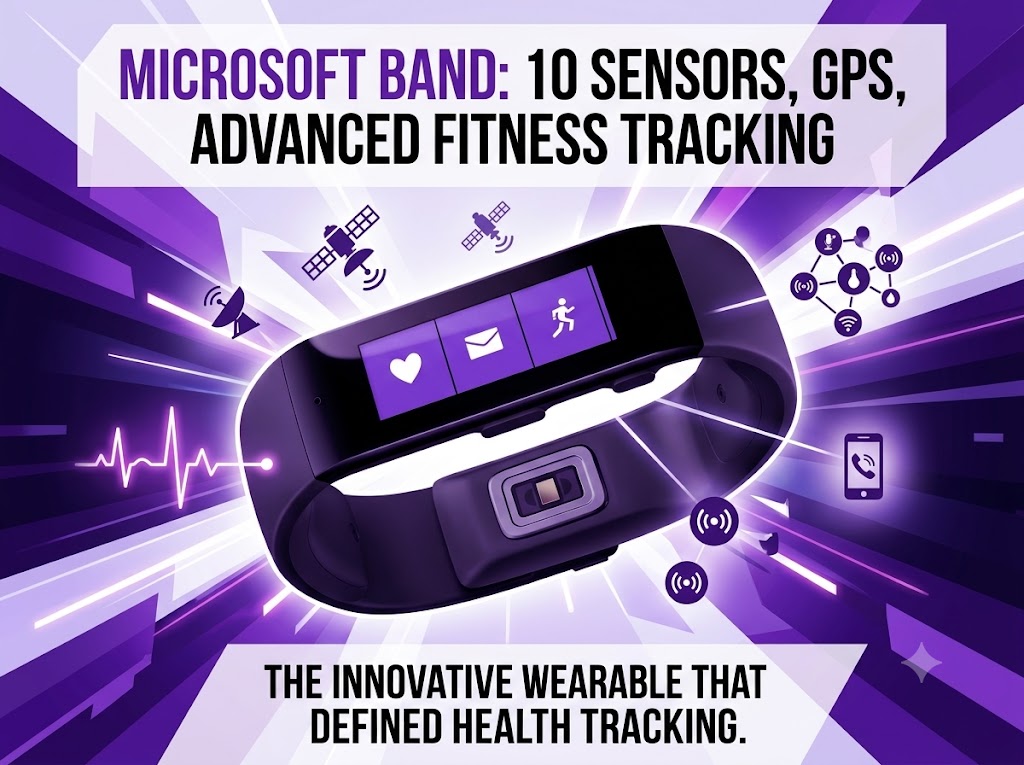
Microsoft’s Band was built for fitness and health tracking. Microsoft put about 10 sensors inside the watch so it could gather many kinds of data.
The list of sensors was pretty long. It had an optical heart-rate sensor, GPS, an accelerometer, a gyroscope, and an ambient-light sensor. It also included a UV sensor, a skin-temperature sensor, a capacitive sensor, and galvanic skin-response sensors.
With all those sensors, the Band stood out from simpler activity trackers. It could track motion, heart rate, workouts, and other body-related readings.
Along with fitness tools, it also had features that looked more like a smartwatch. People could get notifications, see messages, and view alerts without always grabbing their phones.
Microsoft Band Fitness Tracking and GPS
Fitness tracking plus GPS was the core draw. The heart-rate sensor watched users during exercise. The built-in GPS helped for outdoor sessions like running and cycling.
The tech advisor said the GPS was solid in its tests for running and cycling. The review also liked how well the pedometer worked.
Because of the GPS, users did not have to rely only on their smartphones for outdoor workout logs.
GPS came with a cost. WIRED reported that the band lasted about three hours in a marathon test. That meant tougher GPS workouts could drain the battery fast.
Microsoft Health App: How Did It Work?
Microsoft linked the Band to its Microsoft Health app. The app took data from the device and showed it in charts and graphs.
In the app, people could look at daily activity, workouts, and sleep. It also ran on Android, iPhone, and Windows Phone. That wider support made the band easier to find for more phone owners.
Microsoft also included guided workouts. While someone exercised, the band could send cues through vibrations and keep track of the session at the same time.
Putting the hardware and app together made the Band more helpful than a gadget that only counted steps.
Microsoft Band Design: Was It Comfortable?
The band’s look and feel drew a lot of debate.
Microsoft went with a thick, firm build rather than a thinner shape like many other trackers. Several reviewers said it felt off on the wrist, mainly after wearing it for a long stretch.
WIRED criticized the band’s build and appearance. Tech Advisor also noted comfort issues.
Still, not every review was harsh. In Engadget’s user roundup, some people said it felt better after they used it for a while.
Overall, comfort seemed to vary by person and also by wrist size.
Microsoft Band Battery Life: How Long Did It Last?
Battery life changed with daily habits.
With basic tracking, users could get about two to three days. But when GPS workouts were used, the battery drained much faster.
The Guardian said the band could reach roughly three days if GPS was not used. With more GPS time, that number dropped.
This meant casual users could manage the battery reasonably well, but runners and cyclists who frequently used GPS needed to charge it more often.
Microsoft Band Water Resistance and Limitations
Even with its fitness goal, the first Microsoft Band was not built for every workout.
It had splash protection and false water resistance. People should not swim with it and should stay away from heavy water exposure.
The sensor lineup sounded strong, but it had a catch too. Some sensors captured details that the app did not show to users.
So there was a mismatch. The device could sense a lot, yet users only got part of that information.
Microsoft Band Smart Features and Smartphone Support
Microsoft treated the Band like more than a fitness tracker. It added simple smartwatch-style features.
It could show phone alerts. You could check messages, emails, and other notification types right on the wrist.
If you used Windows Phone, you also got extra help from Cortana, which was Microsoft’s voice assistant then.
People with Android and iPhone could still use the core workout tools and notification features. This support across platforms let Microsoft compete without pushing buyers onto Windows Phone.
Microsoft Band Review: Final Verdict
The Microsoft Band tried hard to stand out in the wearable space. It combined many sensors, GPS, nonstop heart-rate tracking, and phone pairing.
Still, the bulky look, weak water handling, and uneven battery results kept it from becoming an easy daily choice.
What the reviews kept pointing back to was simple. The Band had impressive tech inside, but its body design and everyday limits stopped it from matching the top fitness wearables.